
Is anyone else offput by the continued luxury-ification of professional sports-going? Seeing a professional baseball game in 2025 seems more akin to seeing the Jonas Brothers in concert than enjoying anything that could be unironically called an “American pastime.” Five star hotel rooms overlook the fields. Parking is more impossible than at a Disney resort. And to dip a toe into the numbers, Truist Park (the home of the Atlanta Braves, now located outside the city’s perimeter highway) reported a take-home of $6 mill per home game as far back as 2022, a number that’s certainly only climbing. Clearly, this model is successful, but what I wonder is simply: is this conducive to a local community experience?
I don’t delude myself for a moment that my above concern is a shared priority for the people writing checks and collecting profits in the “Sports Venture Real Estate” sphere. Community satisfaction is a separate metric for success than financial measurements and sometimes one flatly does not reflect the other. Or rather, in the short term, that often appears to be the case.
I am nevertheless encouraged by one relative newcomer to the sports world by the name of Banana Ball. Banana Ball is the “baseball-adjacent” game played by the Minor League team The Savannah Bananas, who are a viral sensation currently dominating not just ticket sales but the social media feeds of folks who don’t even follow baseball. They’re an affordably-priced, showmanship-forward, family-oriented alternative to the glitz and opulence of the professional world, and they’ve led me to wonder if perhaps locally-grown products and services are at long last starting to adapt to what I want to call the “Population Problem.”
Please don’t mistake this for some conspiracy-addled, stranger-hating “Problem” meant to exploit paranoia and stir up panic around outsiders, immigrants, globalization, population booms, population declines, or any other manner of the like. The “problem” I want to discuss is far more banal, far simpler. I fear that certain growing population centers in the United States are starting to out-pace the availability of services in their communities. Take a city’s baseball team, for example, which might have a few decades ago performed for a population of several hundred thousand but now juggles the competing attention of multiple millions (millions locally plus, from eyeballs abroad), and per the rules of Capitalism, the prices have changed accordingly. The land in these exploding regions is of course being pawned by commercial land developers, subdivisions and strip malls faster than communities can get an opportunity to even conceive of Main Streets, libraries, and high schools until the demand is already at critical mass, except for in those sprawling developments where all of the above have been organized smartly around a Target, AMC, and Starbucks whose imminence would give the Colosseum a Napoleon complex.
And while some populations are ballooning such that they’re struggling to offer their new citizens more than an overabundance of cheap national chains and matchbox residential hack-job properties, other American communities, many other communities, are shrinking.
Some of these communities are not just disappearing but long fading into myths of America’s development, like Detroit or Buffalo, whose reputations across the county are akin to historic churchyard cemeteries haunting the northeast highways, their Victorian houses, pre-war mills, and abandoned brick warehouses begging eerily to be renovated and resurrected for fear of progress burying them forever. Yet other carcasses of American heritage have survived by commodifying their mythology into cheap tourist destinations where drunken weekenders can view the culture’s proverbial mausoleums, like Tombstone and Salem, each laboring to enter the national, generational prominence enjoyed by the likes of Savannah and The French Quarter, whose industries are truly their “identity,” their history, and their piecrust promise of never changing (though who can stop a slumlord from giving a masterpiece a facelift?)
A quick aside, but all the current “new frontiers” of the 21st century appear to be south of the Mason Dixon: Austin, Metro Atlanta, Miami, Nashville. Dozens of increasingly developed suburban corridors of Florida are becoming new real estate gold rushes. And rumors abound of the same happening in Alabama. Maybe Ashville will keep growing despite its recent tragic flooding. But what are the rumors around the rest of the country? I hear about growth in Ohio. I’ve caught wind of a number of people moving to Montana. But no one talks about Colorado anymore, likely peaking (pun not intended) in popularity in the 2000s. And Seattle has, by all accounts, gotten too expensive to attract any further growth. And are any spots on the Great Lakes expanding? What’s the word from the Twin Cities? Whether it’s the result of our media landscape or narrowing social media feeds (or both and more!), it’s sometimes hard to keep track of what regions and cities in America are actively blossoming.
I’m excited whenever I learn that more of the country is finding new life, especially if it’s a small town or old neighborhood that developers would like to reduced to rubble and rebuilt as a Top Golf but that resists by the gentle merits of not fucking needing that. I don’t know if it’s a genuine trend on social media or just indicative of my personally tailored algorithms, but I keep seeing viral videos highlighting neighborhood spots, particularly little historic burger joints and soda jerks that have endured at the pleasure and ongoing blessing of their local regulars. And it’s this sort of feel-good human interest piece that encourages me.
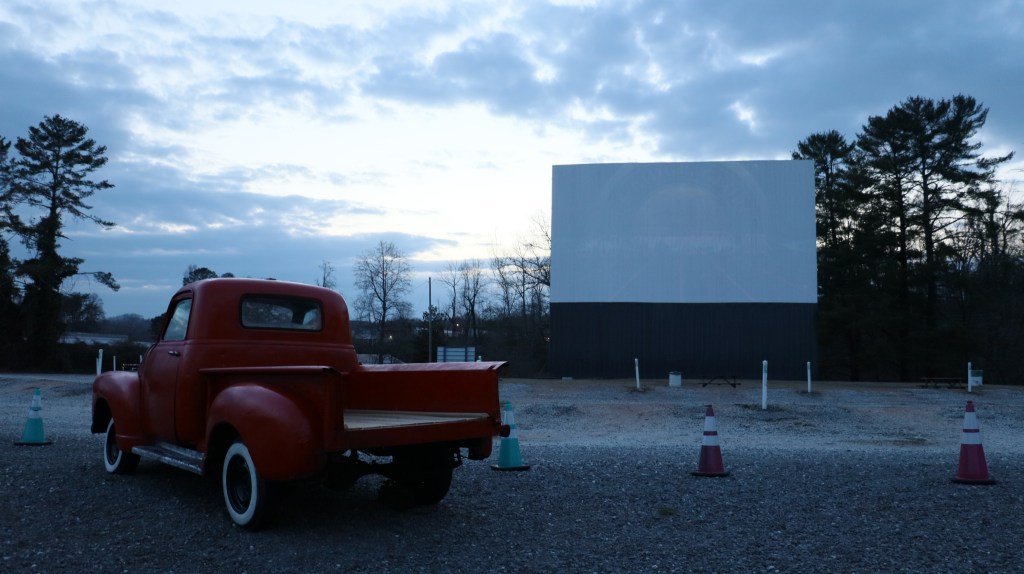
“Educated” consumers (as they would call themselves, though I would say “modern”) profess to reject movie theaters, pumpkin coffees, print books, and backwards small towns. But at this supposed rejection, it occurs to me that it’s sometimes okay for the country to split. In fact, it’s healthy and inevitable and can’t be fought. Few trends are genuinely enjoyed (or hated) by “everyone.” Not even just the literal “everyone” but a majority that can even by authentically hyperbolized as everyone. Fractioning taste and preference is almost certainly good and normal and necessary. And from the looks of things, many consumers in 2025 seem to feel passionately the opposite of the “modern” norm. And I like that! I like that drive-in theaters have reels and TikToks going viral. I like that dark gothic and Victorian interiors are clearly popular again, likely in rejection of the minimalist millennial beige perverts frequently debasing quality architecture with their fetish of hiding from commitment and personality in favor of white walls and resale value.
And the more I reflect on these population booms, these splintering consumer preferences, and these cycles of nostalgia and tradition rising and falling in America, the more I wonder what the inevitable tomorrow will look like. The author and illustrator Chris Van Allsburg, creator of Zathura, Jumanji, and The Polar Express, has another book called Just A Dream that ends with a very striking vision of the future: a man mowing his lawn with a hand mower. You see, the future will always resemble the past and the past will always get re-embraced in the future. Change isn’t just slow, it’s cyclical and unpredictably erratic. Tomorrow, like today, will have wholly new identifiers that yesterday could barely conceive of. Chappell Roan, Celsius energy drinks, zero-drop shoes, Ryan Coogler’s Sinners, Banana Ball… And new technologies will try to reinvent the past. Mirrorless large-sensor cameras with settings intended to look like film. Social media folk musicians covering Joan Baez. Neon-style LED wall lights. Retro-inspired electric vehicles. I imagine that, for all its changes and innovations, 2050s America will more closely resemble 1970s America than Bladerunner 2049 or Tron Legacy.
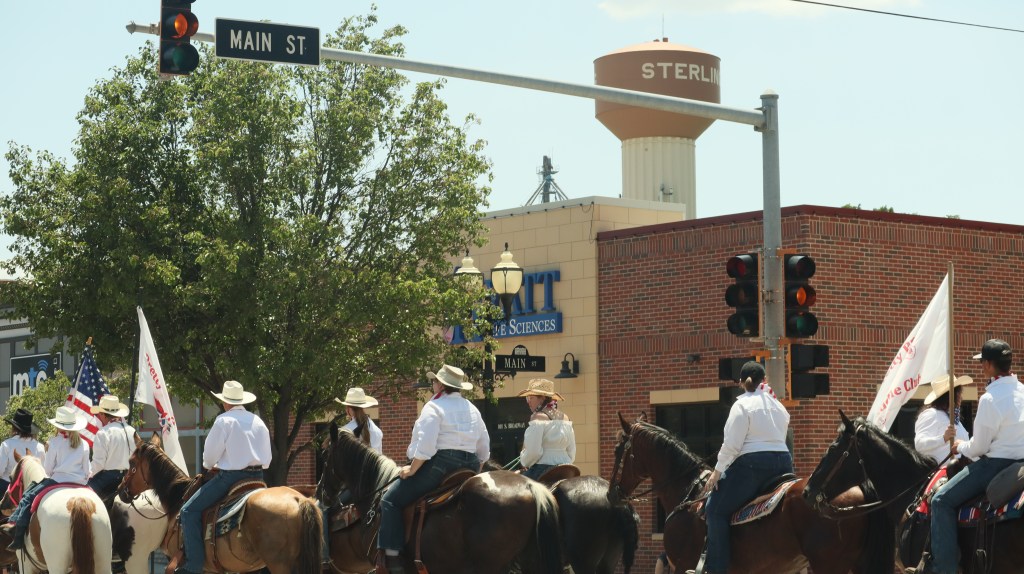
But what I wonder along the way is: how will American families who prefer the lifestyle of small towns and small schools and locally-focused communities and an accessible live sports experience be able to afford such a life in various regions of the country? How will the people in the sprawling, exponentially expanding suburbs find and afford connection with their community? How will families who prefers the winds of the Great Lakes withstand the pull of opportunities in the Southern states? And of course, the elephant in the room, none of this picks at the scab of xenophobia, polarization, and political exploitation that continues to decay our sense of fellowship, trust, and even immediate stability as the backbones of these communities are literally disappeared off our streets.
You must be a gardener of the world you want to see grow. I am thankful for how young I am and yet I mourn how much older I confess to be. All I want to do is travel widely, buy locally, and tour the growing gardens of America that have been fruiting on Main Street while many of us were conned into buying a flash-frozen and processed suburban culture.
These are far from my last thoughts on these matters.
© Nathan Cook 2025, writer and photographer


